Basement Waterproofing NJ for Crawl Space and Basement Moisture Control
Moisture problems in New Jersey homes rarely stay small. A damp basement in June can turn into a musty first floor by August. A humid crawl space can quietly feed mold growth, attract pests, and warp subflooring long before a homeowner notices anything more than a faint odor near the stairs. In a state where heavy rain, high water tables, older foundations, and freeze-thaw cycles often collide, basement and crawl space moisture control is not a cosmetic upgrade. It is building protection.
That reality shapes how experienced contractors approach Basement Waterproofing NJ projects. The right fix depends on where the water comes from, how the house was built, how the lot drains, and what the homeowner expects from the space. A finished basement used as a family room needs a different level of dryness than a stone foundation cellar used only for storage. A crawl space under a shore-area home faces different challenges than a full basement in North Jersey clay soil. The best results come from diagnosis first, product selection second.
Why New Jersey basements and crawl spaces struggle with moisture
New Jersey gives foundations a little of everything. Some neighborhoods sit on heavy, slow-draining soils that hold water against foundation walls after a storm. Other areas deal with elevated groundwater, especially after a wet season. Along the coast, humidity can stay high for long stretches, which matters even when bulk water is not visibly entering. Add in older housing stock, patched foundations, aging mortar joints, and downspouts that discharge too close to the home, and it becomes easy to see why moisture problems are so common.
A lot of homeowners assume water in the basement must mean a single crack in one wall. Sometimes that is true, but often the situation is more layered. Water may be collecting along the footing because roof runoff is dumping near the house. It may be pushing through porous concrete walls. It may be rising through the slab as vapor. In crawl spaces, the issue is often not standing water at first. It is humid outside air entering through vents, condensing on cooler surfaces, and keeping wood framing damp enough for mold and rot.
One of the more frustrating parts of moisture control is that symptoms do not always point neatly to the cause. Efflorescence on a wall, peeling paint, rusting appliance legs, cupped flooring upstairs, and a persistent earthy smell can all show up in different combinations. Homeowners often try a dehumidifier first, and sometimes that helps, but it is not the same as waterproofing. It treats air moisture, not the path water takes into the structure.
The difference between waterproofing and moisture management
People use the word waterproofing loosely, but in practice there are a few different categories of work. True moisture control often combines them.
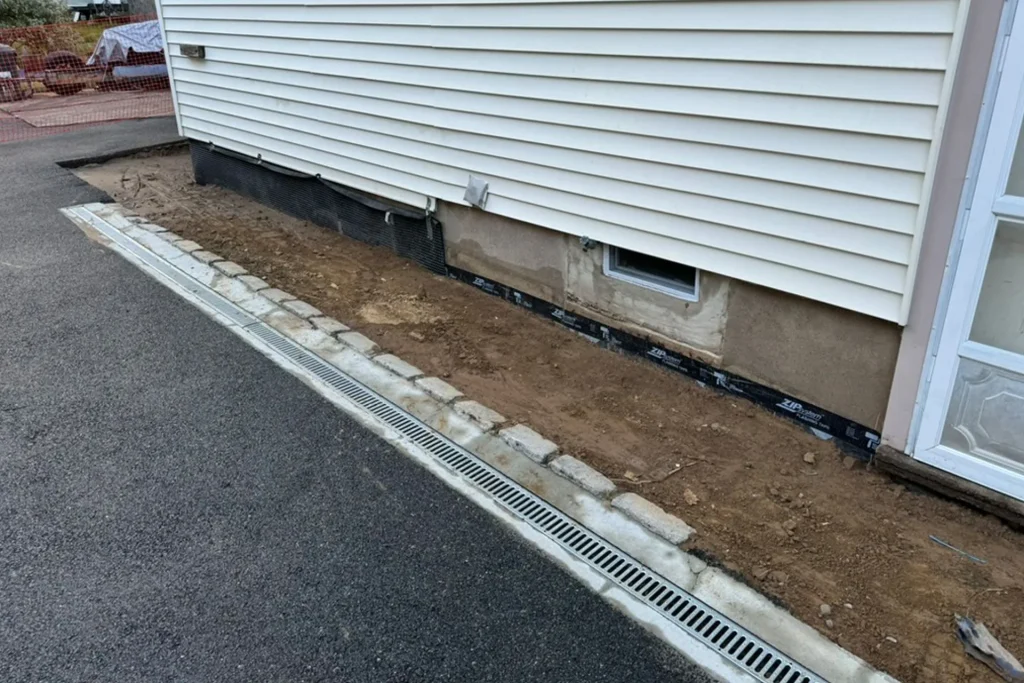
Exterior water management aims to keep water away from the foundation before it becomes pressure against the wall. That can include grading, gutters, downspout extensions, swales, and sometimes excavation with exterior membranes and footing drains. Interior water management accepts that water may reach the wall or footing and then controls it through drainage channels, sump systems, vapor barriers, and dehumidification. Air sealing and insulation also matter, especially in crawl spaces, because moisture is not only liquid. It is also vapor and humid air.
A professional Basement Waterproofing NJ plan should account for all three forms of moisture exposure: liquid water, water vapor, and humid air. Miss one, and the job can underperform. I have seen basements with brand-new wall coatings still smell damp because the slab was sweating. I have also seen crawl spaces with fresh plastic on the ground still develop mold because open vents were feeding summer humidity into the space.
What a proper inspection should uncover
A good inspection is less about selling a system and more about ruling things in or out. Contractors with real field experience usually start outside. They look at grading, roof drainage, hardscape pitch, low spots near the foundation, and signs that water is lingering after storms. They pay attention to the age of the home and foundation type. Poured concrete behaves differently than block, and both behave differently than stone.
Inside, the clues matter. Water staining along the wall-floor joint often suggests water building up at footing level. Isolated seepage through a crack can point to a more localized entry path. White mineral deposits suggest chronic migration through masonry. Elevated humidity with no visible leaks may suggest vapor drive or air infiltration. In crawl spaces, a sharp inspector will check the wood moisture content, look for mold on joists, note whether insulation is falling, and inspect for signs of condensation on ductwork or pipes.
If the basement is finished, inspection gets trickier. Water can be hiding behind drywall, under vinyl flooring, or inside wall cavities. A homeowner may only notice that the room smells stale after rain. In those cases, experience matters. You are reading the house as much as the stain pattern.
Basement problems usually start outside, even when the fix ends up inside
Some of the most effective moisture control improvements are simple. If a downspout empties right at the corner of the foundation, you do not need a complicated theory to explain why that corner is wet. I have seen basement seepage improve dramatically after correcting gutter overflow, extending discharge lines, and adding soil where settlement had created a trench around the foundation. Those repairs are often less expensive than a full interior system and should never be skipped if they are clearly part of the problem.
Still, exterior corrections do not always solve everything. In many New Jersey homes, especially older ones or homes in neighborhoods with persistent groundwater issues, water pressure around the footing remains high even after surface drainage improves. That is when interior drainage systems become the workhorse solution. Installed properly, they intercept water at the perimeter and move it to a sump basin before it spreads across the slab.
This is where judgment comes in. Some contractors oversell excavation when an interior system would perform well. Others push interior systems without addressing obvious grading failures, which leaves the home under unnecessary water load. The best recommendations usually blend the two.
Interior drainage systems, sump pumps, and what actually matters
Interior drainage is one of the most common answers for wet basements in this region, and for good reason. It is less disruptive than exterior excavation, often more practical around porches or tight property lines, and effective against hydrostatic pressure at the slab edge. But not all systems are equal.
The visible part of the job is modest: some concrete is removed along the perimeter, a drainage channel or perforated pipe is installed, and the slab is restored. The hidden difference is in pitch, clean drainage stone, connection details, and the sump system itself. A weak sump pump can undermine an otherwise decent installation. So can a basin without a proper lid, which allows humidity and odors back into the basement.
If I had to name the components that deserve the most scrutiny, they would be these:
- A sump pump sized for the expected water volume, not just the cheapest model on the truck.
- A battery backup or water-powered backup where outages are a concern, especially during storms.
- A discharge line that sends water well away from the house and does not dump back at the foundation.
- A check valve and freeze-conscious discharge design for winter reliability.
- A sealed sump lid when indoor humidity, odors, or radon concerns are in play.
Homeowners often focus on the perimeter drain and forget the pump is the engine of the system. In a major rain event, that pump is doing the real work.
Wall coatings, sealants, and why they are rarely enough on their own
There is a place for masonry sealers and crack injection, but they are often misunderstood. A polyurethane or epoxy injection can be an excellent repair for a specific wall crack. A vapor-permeable masonry coating can reduce minor dampness migration through a wall. What these products do not do well is stop active hydrostatic pressure at the footing. If water is pushing upward or collecting behind the wall in volume, surface coatings alone are usually temporary.
That is why one homeowner can swear by a waterproof paint while another says it failed in six months. They did not necessarily use different products. They had different moisture mechanisms. If the main issue was mild vapor transmission through an otherwise sound wall, a coating may have helped. If the issue was footing pressure during storms, the coating was never enough.
Crawl spaces need a different mindset
Crawl spaces are often treated as afterthoughts, yet they can affect the whole house. Air from a damp crawl space does not stay politely below the floor. It moves upward through gaps around plumbing, wiring, and framing seams. That movement carries moisture, odor, and sometimes mold spores with it. Floors above can feel clammy. HVAC systems can struggle. Insulation can sag and lose effectiveness.
Traditional vented crawl spaces are especially problematic in humid weather. The old idea was that vents would dry the space. In many New Jersey summers, they do the opposite. Warm, wet air enters, cools, and raises relative humidity inside the crawl space. Wood stays damp. Metal sweats. Fiberglass insulation absorbs moisture and droops.
A modern crawl space moisture-control strategy often includes ground vapor barrier installation, wall and rim joist air sealing, drainage if water intrusion exists, and a dedicated dehumidifier or conditioned-air approach. In some cases, encapsulation is the right answer. In others, partial measures are enough. It depends on water entry, budget, and how the space interacts with the rest of the home.
One crawl space in central New Jersey comes to mind. The owner thought she had a floor insulation problem because the first-floor hardwood felt cold in winter and sticky in summer. Under the house, the real story was obvious. The plastic on the ground was thin and torn, vents were open, the joists showed scattered mold, and the ductwork had condensation marks. After drainage corrections outside, a heavier sealed vapor barrier, selective insulation replacement, and humidity control inside the crawl space, the smell disappeared and the floors stabilized. The fix was not glamorous, but it worked because it addressed the whole moisture cycle.
Encapsulation is powerful, but it is not magic
Encapsulation has become a popular term, and for good reason. When done properly, it can transform a crawl space from a damp liability into a controlled part of the building envelope. But the phrase “done properly” matters.
Encapsulation should start only after bulk water issues are understood. Laying a liner over a muddy crawl space without addressing water entry is like putting clean carpet over a leaking subfloor. A durable vapor barrier should cover the ground and usually continue up foundation walls, with seams sealed and penetrations detailed carefully. The crawl space should then be managed for humidity, either with dehumidification or an approved conditioning strategy. Sometimes perimeter drainage and a sump are also needed.
What homeowners sometimes miss is that encapsulation is part of a system, not a single product. If the contractor ignores standing water, leaves vents open, or installs a liner too thin for real service conditions, the job may look neat on day one and disappoint by year two.
When exterior excavation makes sense
Exterior excavation is expensive and disruptive, but sometimes it is the right answer. If a foundation wall has widespread deterioration, if there is severe lateral water entry through below-grade wall surfaces, or if site conditions allow proper exterior membrane and drainage installation, exterior work can provide a robust long-term solution. It also gives access to structural repairs that cannot be handled from the inside.
That said, excavation is not automatically superior. Porches, patios, decks, utilities, lot lines, and landscaping can make it impractical or costly. In dense neighborhoods, access alone can be a major constraint. For many homes, a hybrid approach delivers better value: improve surface drainage outside, then install targeted interior controls where needed.
Signs the moisture problem is already affecting the house
Homeowners tend to wait until they see standing water, but there are earlier indicators that deserve attention. The following warning signs are worth taking seriously:
- A persistent musty smell in the basement, crawl space, or first floor
- White chalky deposits on foundation walls or dark staining along the slab edge
- Peeling paint, warped trim, rust on appliances, or damp cardboard storage
- Sagging crawl space insulation, mold on joists, or condensation on ductwork
- Allergy flare-ups or a humid, clammy feel indoors after rain
None of these signs proves a single cause, but together they point to a building that is taking on more moisture than it should.
Choosing a contractor for Basement Waterproofing NJ work
This field has excellent specialists and plenty of fast-talking salespeople. Homeowners are often shown a one-size-fits-all package after a brief walk-through, and that is where bad decisions start. A contractor should be able to explain where the water is coming from, why the proposed system matches that pattern, and what limitations remain. If someone cannot describe the difference between seepage at the cove joint, wall penetration, and ambient humidity, they may be selling inventory rather than solving a problem.
Ask practical questions. What happens to the discharge in winter? Is there a backup pump? How is the crawl space humidity controlled after encapsulation? If the basement is finished, how will the contractor minimize demolition and account for hidden moisture? What maintenance does the system require? Experienced companies answer these without hesitation and usually with examples from similar homes.
It is also wise to keep expectations realistic. https://maps.app.goo.gl/C7R83h4BFVWygmYv7 No honest contractor should promise a basement that feels like a climate-controlled living room if the plan only includes a wall sealer and no humidity management. On the other hand, not every damp basement needs a costly full-perimeter system. The diagnosis drives the scope.
Cost, value, and what homeowners are really paying for
Waterproofing costs vary widely in New Jersey because the problems vary widely. A simple crack injection is a different job from a full interior drainage system with sump and battery backup. Crawl space encapsulation costs depend on access, size, whether drainage is needed, and the condition of the framing and insulation. Exterior excavation tends to be at the higher end because labor, disposal, and restoration all add up quickly.
The real value is not just in preventing puddles. It is in protecting finishes, lowering mold risk, preserving indoor air quality, reducing structural decay, and making the lower level usable. A basement that stays dry protects water heaters, furnaces, laundry areas, storage, and sometimes living space. A controlled crawl space protects the floor system above it and improves comfort throughout the house.
I have seen homeowners delay repairs for years because the basement “only gets a little water.” Then one hard storm ruins flooring, drywall, furniture, and irreplaceable storage. Small chronic moisture is often more damaging over time than one obvious leak because it quietly feeds rot and mold while everyone adapts to the smell.
Maintenance matters after the installation
Even a well-designed system needs occasional attention. Sump pumps should be tested. Battery backups need monitoring and eventual replacement. Gutters must stay clear. Downspout extensions should remain connected and discharge away from the house. Dehumidifiers need filter cleaning and condensate management. Crawl space liners should be checked after other trades work under the house.
This is not burdensome maintenance, but it is real. Moisture control is one of those parts of homeownership where a little vigilance goes a long way. A yearly inspection, especially before storm season, can catch problems while they are still simple.
A dry basement and crawl space start with the right diagnosis
Basement and crawl space moisture problems can look similar from the surface while requiring very different solutions underneath. That is why the best Basement Waterproofing NJ projects begin with observation, not assumptions. The house tells a story through grading, stains, odors, humidity levels, crack patterns, and drainage paths. Once that story is read accurately, the fix usually becomes much clearer.
For some homes, the answer is exterior water control and a few targeted repairs. For others, it is interior drainage, a dependable sump system, and humidity management. In crawl spaces, the turning point is often moving away from the old vented model toward a sealed, controlled environment. The goal is not just to hide moisture symptoms. It is to break the cycle that creates them.
When that happens, the change is noticeable. The basement stops smelling damp. The crawl space stops affecting the rooms above it. Stored items stay dry. Finishes last longer. The house feels healthier and more stable because, at a basic level, it is. That is what good waterproofing and moisture control are supposed to do.
ARD Waterproofing
Address: 98 Smull Ave, West Caldwell, NJ 07006
Phone number: +12016465936
FAQ About Basement Waterproofing NJ
What is the best waterproofing method for a basement?
The best overall approach to waterproofing a basement is a combined exterior and interior system that stops water at the foundation wall and safely manages any moisture that gets through.
What is the average cost to waterproof a basement?
The average cost to waterproof a basement ranges from $2,500 to $15,000, with most homeowners paying around $5,200 for a complete project.
Can a basement be waterproofed from the inside?
Yes, a basement can be waterproofed from the inside, and it is often the most affordable and least disruptive method.